
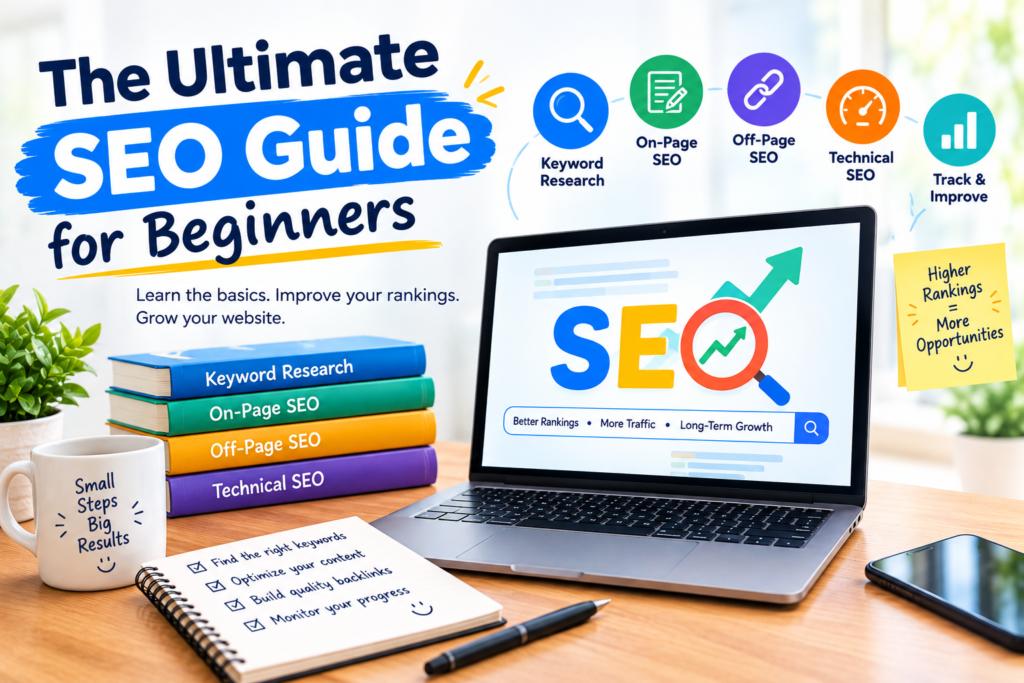
The Ultimate SEO Guide for Beginners
If you have a website, blog, online store, or business, you have probably heard the term SEO. The Ultimate SEO Guide for Beginners explains why Search Engine Optimization is one of the most important parts of digital marketing.
But what exactly is SEO? How does it work? Why is it important? And how can a beginner start using SEO to get more visitors from search engines?
The Ultimate SEO Guide for Beginners explains SEO in simple terms and gives you a practical starting point for improving your website’s visibility.
What Is SEO?
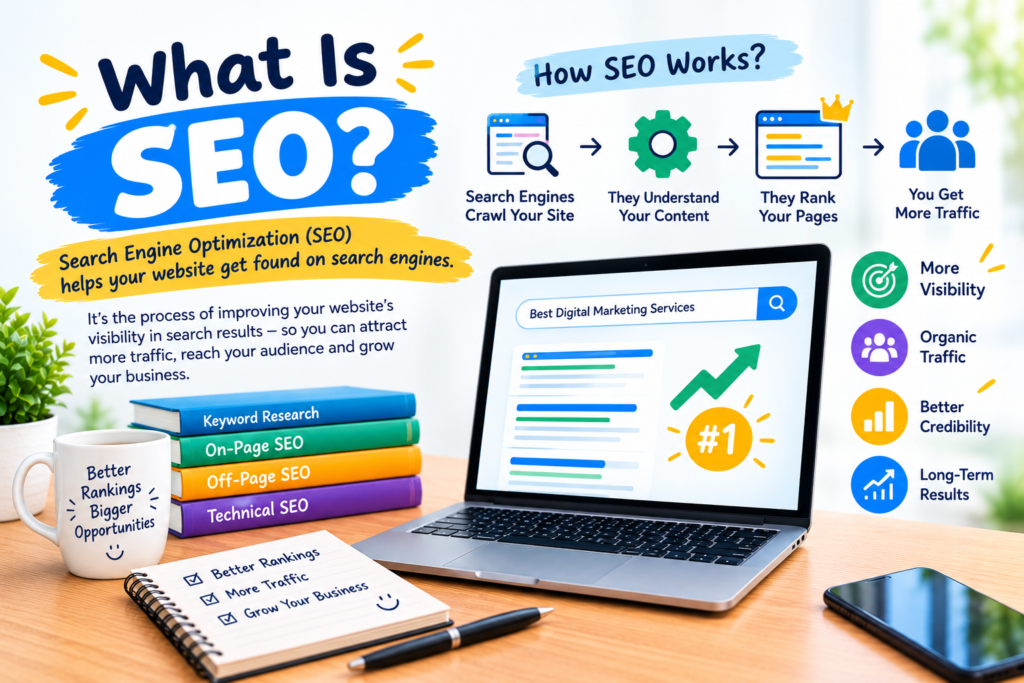
The Ultimate SEO Guide for Beginners starts with understanding what SEO actually means.
Search Engine Optimization (SEO) is the process of improving a website and its content so that search engines can better understand it and users can discover it through unpaid, or organic, search results.
When someone searches for something on a search engine, they usually receive a list of web pages that the search engine believes are relevant and useful.
For example, imagine you have a website that sells handmade candles. Someone might search for:
- “best scented candles”
- “handmade candles online”
- “soy candles for gifts”
If your website is optimized properly, your pages may appear when people search for terms related to your products.
SEO is not simply about adding keywords to a webpage. Modern SEO involves creating helpful content, providing a good user experience, making your website technically accessible, and demonstrating that your content is trustworthy and relevant.
Why Is SEO Important?
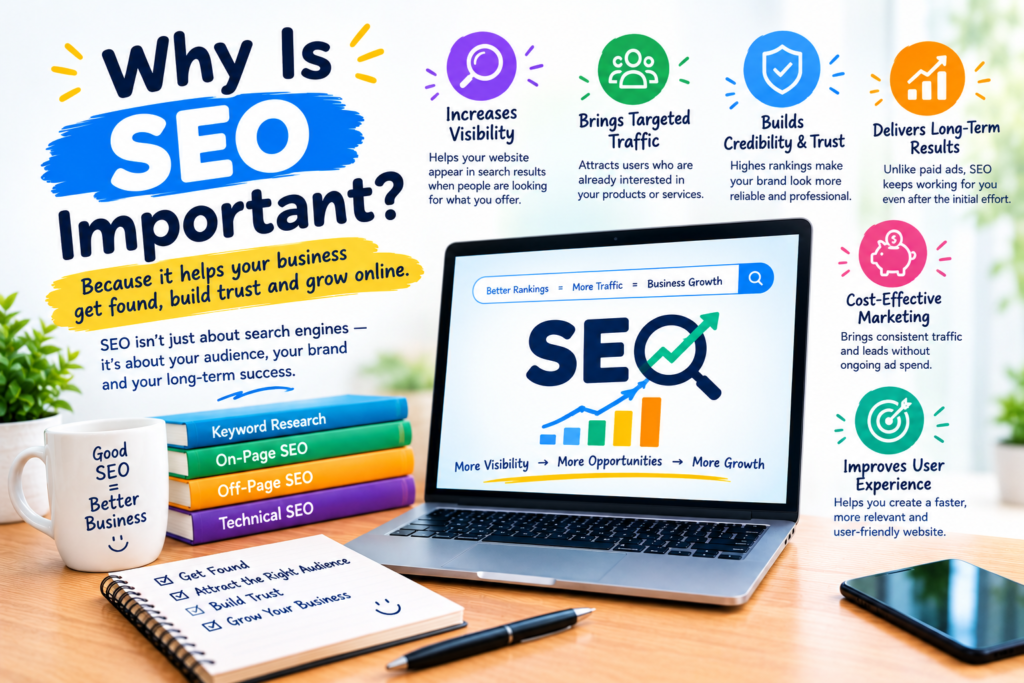
The Ultimate SEO Guide for Beginners also highlights why SEO matters for websites and businesses.
SEO can help websites attract people who are actively searching for information, products, or services.
One major advantage of SEO is that it can generate organic traffic without requiring you to pay for every click.
For example, if a blog post ranks well for a popular search query, it can potentially continue attracting visitors over time.
SEO can help you:
- Increase website visibility
- Attract relevant visitors
- Build brand awareness
- Generate leads
- Increase online sales
- Establish authority
- Improve user experience
However, SEO is usually a long-term strategy. It can take time for search engines to discover, understand, and rank new or updated content.
How Do Search Engines Work?
To understand SEO, it helps to understand the basic process search engines use. The Ultimate SEO Guide for Beginners covers the three important stages beginners should understand.
Search engines generally perform three important activities:
1. Crawling
Search engines use automated programs, often called crawlers or bots, to discover webpages and follow links between pages.
If a search engine can access your website, its crawler can potentially discover your content.
2. Indexing
After discovering a webpage, a search engine analyzes and stores information about that page in its index.
Indexing allows the search engine to retrieve relevant pages when someone performs a search.
3. Ranking
When a user enters a search query, the search engine determines which indexed pages are most relevant and useful for that particular search.
Many different signals can influence ranking.
This is why SEO involves much more than simply using keywords.
The Three Main Areas of SEO
The Ultimate SEO Guide for Beginners introduces three major areas of SEO that every beginner should understand:
- On-page SEO
- Off-page SEO
- Technical SEO
Understanding these three areas gives beginners a strong foundation.
1. On-Page SEO
On-page SEO involves optimizing elements on your website and individual webpages.
Keyword Research
Keyword research is the process of discovering the words and phrases people use when searching for information.
For example, if you write about fitness, possible keywords could include:
- “home workout for beginners”
- “how to lose weight safely”
- “beginner strength training”
- “best exercises at home”
Good keyword research starts with understanding your audience.
Ask yourself:
What would my target audience search for if they needed the information, product, or service I provide?
Do not focus only on keywords with huge search volumes. More specific searches can sometimes attract highly relevant visitors.
Create Helpful Content
One of the most important parts of SEO is creating content that genuinely helps your audience. The Ultimate SEO Guide for Beginners emphasizes the importance of useful and relevant content.
A good article should answer the reader’s question clearly and completely.
For example, if someone searches for “how to start a blog,” an article should provide practical information about choosing a topic, selecting a platform, creating content, and promoting the blog.
Avoid creating pages simply to target keywords.
Instead, understand the searcher’s intent and create content that satisfies it.
Optimize Page Titles
The title of a webpage helps users and search engines understand what the page is about.
A good title should be:
- Clear
- Relevant
- Specific
- Attractive to searchers
For example:
Weak:
“SEO Tips”
Better:
“The Ultimate SEO Guide for Beginners: 10 Practical Tips”
The second title tells readers exactly what they can expect.
Write Useful Meta Descriptions
A meta description is a short description that can appear below a webpage’s title in search results.
Although it is not simply a ranking trick, a clear and compelling description can help searchers understand what your page offers.
For example:
Learn SEO from the ground up with this beginner-friendly guide covering keyword research, on-page SEO, technical SEO, backlinks, and common mistakes.
Use Headings Properly
Headings make content easier to read and help organize information.
Use a logical structure with a main heading and subheadings.
For example:
H1: The Ultimate SEO Guide for Beginners
H2: What Is SEO?
H2: Why Is SEO Important?
H2: How Does SEO Work?
H2: Keyword Research
H2: Technical SEO
This structure makes long articles easier to navigate.
Optimize Images
Images can make content more engaging, but large or poorly optimized images can negatively affect page performance.
Use appropriate image formats, compress large files, and provide descriptive alternative text when appropriate.
Alt text can also improve accessibility for people who use screen readers.
2. Off-Page SEO
Off-page SEO refers to activities that take place outside your website that can contribute to its reputation and visibility.
The Ultimate SEO Guide for Beginners also explains why off-page SEO is important for building website authority.
One of the most well-known aspects of off-page SEO is link building.
What Are Backlinks?
A backlink is a link from another website to your website.
For example, if a respected marketing website links to your article about SEO, that link can potentially contribute to your site’s authority.
However, not all backlinks are equally valuable.
Quality is generally more important than quantity.
A few relevant links from reputable websites can be more valuable than a large number of low-quality or irrelevant links.
How Can You Earn Backlinks?
Instead of trying to acquire links through manipulative tactics, focus on creating content that people naturally want to reference.
Examples include:
- Original research
- Useful guides
- Industry statistics
- Case studies
- Helpful tools
- Detailed tutorials
- Original insights
You can also build relationships with relevant publishers, journalists, bloggers, and businesses.
3. Technical SEO
Technical SEO focuses on making your website easier for search engines to crawl, understand, and access. The Ultimate SEO Guide for Beginners covers the basic technical elements that beginners should know.
You do not need to be a professional developer to understand the basics.
Website Speed
People expect websites to load quickly.
Slow pages can create a poor user experience, particularly for visitors using mobile devices.
You can improve performance by:
- Compressing images
- Reducing unnecessary scripts
- Using efficient hosting
- Minimizing excessive page elements
- Keeping your website technically clean
Mobile-Friendly Design
Many people access websites using smartphones.
Your website should therefore work properly across different screen sizes.
Make sure:
- Text is easy to read
- Buttons are easy to tap
- Images fit the screen
- Navigation is simple
- Pages load efficiently
HTTPS
HTTPS helps protect information exchanged between a user’s browser and a website.
A secure website should use HTTPS rather than an unsecured HTTP connection.
XML Sitemap
An XML sitemap provides search engines with information about important URLs on your website.
It can help search engines discover pages, especially on larger websites.
Robots.txt
A robots.txt file provides instructions to crawlers about which areas of a website they should or should not access.
It needs to be configured carefully because incorrect rules can prevent important pages from being crawled.
Understanding Search Intent
One of the most useful SEO concepts for beginners is search intent. The Ultimate SEO Guide for Beginners explains why understanding search intent is essential when creating content.
Search intent refers to what a person is actually trying to accomplish when they perform a search.
For example:
Informational intent:
“How does SEO work?”
The person wants information.
Navigational intent:
“Google Search Console”
The person is looking for a particular website or resource.
Commercial investigation:
“Best SEO tools for small businesses”
The person is researching options before making a decision.
Transactional intent:
“Buy SEO software”
The person is ready to take an action or make a purchase.
Understanding intent helps you create content that matches what users actually need.
Common SEO Mistakes Beginners Should Avoid
The Ultimate SEO Guide for Beginners also covers common SEO mistakes that new website owners should avoid.
SEO can be confusing, and beginners often make a few common mistakes.
Keyword Stuffing
Adding the same keyword repeatedly can make content unnatural and difficult to read.
Write naturally and use relevant terms where they genuinely make sense.
Copying Content
Publishing copied or lightly modified content provides little value.
Aim to create original, useful information.
Buying Low-Quality Backlinks
Large numbers of artificial or irrelevant links can create SEO problems.
Focus on earning legitimate links through valuable content and relationships.
Ignoring User Experience
SEO is not just about search engines.
Your website should also be easy and enjoyable for humans to use.
Expecting Instant Results
SEO usually requires patience.
Some pages may gain visibility quickly, while others can take much longer.
Consistent improvement is more useful than expecting overnight success.
Useful SEO Tools for Beginners
Several tools can help you understand and improve your website’s search performance.
The Ultimate SEO Guide for Beginners recommends starting with a small number of useful SEO tools rather than trying to use everything at once.
Useful categories include:
Google Search Console: Helps website owners monitor search performance and identify certain technical issues.
Google Analytics: Helps analyze website traffic and user behavior.
Keyword research tools: Help discover search queries and evaluate keyword opportunities.
SEO auditing tools: Can identify technical and on-page issues.
Page performance tools: Help analyze loading speed and user experience.
You do not need dozens of tools when starting. Learn how to use a few tools effectively before adding more.
A Simple SEO Strategy for Beginners
If you are completely new to SEO, The Ultimate SEO Guide for Beginners recommends following this basic process:
Step 1: Understand Your Audience
Identify who you want to reach and what problems they are trying to solve.
Step 2: Research Keywords
Find relevant search terms that match your audience’s questions and needs.
Step 3: Analyze Search Results
Search for your target topic and examine the pages currently ranking.
Look at what they cover and identify opportunities to provide something more useful, clearer, or more complete.
Step 4: Create High-Quality Content
Write content that genuinely satisfies the user’s search intent.
Use clear headings, examples, images where useful, and practical information.
Step 5: Optimize Your Page
Improve the title, headings, URLs, internal links, images, and other relevant on-page elements.
Step 6: Improve Technical SEO
Make sure your website is accessible, mobile-friendly, secure, and reasonably fast.
Step 7: Promote Your Content
Share useful content through relevant social networks, communities, newsletters, and industry relationships.
Step 8: Measure and Improve
Monitor your performance and update your content when necessary.
SEO is an ongoing process rather than a one-time task.
How Long Does SEO Take?
There is no universal timeline for SEO success.
The Ultimate SEO Guide for Beginners explains that SEO results can vary depending on several factors.
Results can depend on factors such as:
- Website age
- Competition
- Content quality
- Website authority
- Search demand
- Technical health
- Industry
- Consistency
Some improvements may have an impact relatively quickly, while competitive keywords can take months or longer.
The best approach is to focus on building a strong website and useful content rather than chasing immediate rankings.
Final Thoughts
SEO may seem complicated at first, but the basic idea is straightforward: help search engines understand your website and give users the information they are looking for.
The Ultimate SEO Guide for Beginners shows that starting with the fundamentals can give you a strong foundation for improving your website.
Start with the fundamentals. Research your audience, understand search intent, create useful content, optimize your webpages, improve technical performance, and build your website’s reputation naturally.
Most importantly, remember that SEO is not about trying to trick search engines. It is about creating a better experience and providing genuine value.
As you gain experience, you can explore more advanced topics such as structured data, technical audits, international SEO, local SEO, content strategy, link acquisition, and conversion optimization.
Whether you are building a personal blog, launching an online store, or promoting a business, learning SEO can help you build a stronger and more discoverable online presence.
The Ultimate SEO Guide for Beginners provides the foundation you need to start learning, practicing, and improving your SEO strategy.
Start small, stay consistent, measure your progress, and keep improving. That’s the foundation of successful SEO.